Friday, 27 March 2020

Covid-19: "In everything give thanks..."

We're on day 11 of social isolation. There have been a range of emotions thus far, as previous blog posts have illustrated, and many of them haven't been easy. But we, and I think many others, have stumbled upon some real nuggets of joy and blessing in what is ostensibly a pretty good impression of a horror movie.

Here are some "surprised by joy" experiences I've had over the last 10 days.


1) Everything slowing down and stopping
My daily life hasn't necessarily slowed down physically: I now have not a single minute to myself and am now a full-time homeschooling mum of three lively and wonderful daughters. But before the Coronavirus it was pretty common for Aidan & I to have to schedule a night in together each week to make sure we caught up. Life was full of social engagements, school admin, church activities and many responsibilities that have sudden disappeared, leaving the gift of time and energy in their place. Don't get me wrong, I do miss some of it, but it's a lot, and I had to be incredibly well organised to get it all done. Life was 100 miles an hour. There's an immensely comforting feeling of slowness and stillness right now. Coming down from putting the kids to bed and knowing there's not really anything to do or anywhere to go and just wandering into our lounge for church meetings on Zoom instead of battling to get out of the door on time after a day's work is so relaxing. We are very blessed to have a lovely home with a garden to enjoy during this time, with plenty of space for us all, so I am aware this makes a huge difference to how we experience this.

2) Being far more present
As a result of the slowing down and schools shutting, I am now spending more time than I have done for years with my children with absolutely nothing else to distract me. I'm not trying to make tea while worrying about whether we'll be finished by the time the piano teacher gets here or one of us has to leave to meet a friend. It's made me realise that so often when I'm irritated by the kids, it's because there's a time pressure or emotional trigger on the situation (what will our friends think if they arrive now and see my kids/the house like this!), rather than because the issue with the child is beyond my reach to resolve. With nothing else to do, I've found myself pretty easily able to have enough patience and calm to deal with the fights and arguments. This is down to God giving me unlimited grace and strength each day, but humanly speaking, if we are being spread too thin, then cracks are going to show. God made us with finite resources.

3) Not having too much choice
We often struggle to think of what to do and where to go on a weekend. This place or that place, shall we take them for a drink and cake, who haven't we seen for a while, should we have so and so round for dinner? Again, all lovely things. But it's actually been really liberating to be so confined in your choices that you don't expend much emotional or mental energy on making those decisions. I definitely get 'decision fatigue' so it's nice to just know that we either stay at home with our vast list of activities or choose one walk to do. Even with the food shortages at the supermarkets, accepting that I'll cook whatever I can get hold of has been quite freeing!

4) Noticing
We've been going for daily walks in the glorious sunshine, and with no deadlines and the incentive of knowing that you have to make the most of it, I've been pausing to take in the details we used to miss. The delicate colour of buds and flowers, the way the sunlight plays through a glade of silver birches and the breathtaking views of the Yorkshire moors have all lit our life up in the last week. We've been so grateful that we're in a location that holds an array of gorgeous walks from our doorstep so we can easily get out into nature without having to drive anywhere. The walks have also been a time of my brain "defragging" and taking the time to process everything that's going on because there's nothing else crowding into them.

5) Being kind to ourselves
It's such a cliché, but when there's a raging pandemic that shuts down life as we know it, it's patently obvious that being kind to yourself and cutting yourself and your loved ones some slack is a complete no-brainer. I'm not planning on learning to crochet or read the complete works of Shakespeare or anything particularly 'big' over the next few months. I'm just happy if we all get through each day with as much kindness and love as possible. So if the kids want to watch a movie after the 'school' day's finished, it's fine. If I want a glass of wine and a cake on an evening, go for it. If the kids get angry and upset I'm far quicker to offer a hug than to chide them, understanding that it's part of how they're trying to adjust to so much change.

Reading this list back, the question is, why don't we do these things anyway? I am already curious about how we will all assimilate back into 'normal' life once this is over. I don't want to lose many of these blessings and just return to the fast-paced, fraught existence that was our previous norm. There's a sense that while Covid-19 is a symptom of brokenness, it's also here to show us a whole load of things we needed to fix. 

What positives have come out of this for you so far?


Wednesday, 25 March 2020

Covid-19: "The Lord is close to the broken-hearted, and saves those who are crushed in Spirit..."

It strikes me that we're going to have to do a lot of "speaking to our souls" during this time. It's hard not to let the feeling of sadness and despair set in at times and dominate what, in many ways, is a precious gift to us: of time, of lifted pressure, of slowing, of family time and of reconnection via technology with many friends and family.

The last two days - the first two of our new 'homeschooling' life - have been pretty marvellous. With all the tabs in my head's browser shut down, I've been able to be more present than I have for years with my children. Going for a walk and taking time to admire the blossoming spring flowers each morning has been so peaceful and relaxed. Not rushing around to co-ordinate family life around church meetings, work or social engagements is completely liberating.

More on all that another time.

Today's been a really hard day. As many of you know, I own a small business, one that I've built up myself from scratch over the last 4.5 years and that's gone from a hobby to a quickly growing enterprise that now has another employee and has grown by over 500% turnover in the last 3 years. I had lots of weddings booked in for this year and many other celebration cakes, not to mention the in person classes I regularly run.


And now pretty much all of that is gone - just wiped out. The wedding postponements have been coming in left and right and today I had a postponement for September this year. My heart goes out to all these couples and other businesses that are so affected by all this. And today it suddenly caught up with me how devastating this is for my business.

There's been so much adrenaline in this process so far, with the daily press conference bringing a more serious announcement each time 5pm strikes, me scrambling to adjust to work practices and now becoming a full-time homeschooling mum for the first time ever. At first, I knew my March weddings would get cancelled, then April, and probably May. But to realise that actually I could lose 6 months + of revenue from this and not be able to do the job I love for that amount of time - it really hit me.

I am just one drop in the ocean of people affected financially by the Coronavirus. We're all grieving and unsure, so it feels harder to be able to talk about it and get the support you would otherwise because everyone's in the same boat - or far worse - and everyone's emotionally exhausted. What employed people may not understand is that it's not just the finance (although that represents a significant change for us). It's the fact that something you've created entirely with your own brain and hands, your love and determination and creativity and disappointment and persistence, is taking a few really hard knocks. I've been so used to growing Three Little Birds Bakery, innovating, making things more efficient, improving quality, for so long. I've been in the most amazing atmosphere of growth and now it's gone. And that does hurt.

I am the opposite of a "fixer". While I think helpful suggestions can be suitable at times, most of the time I think when someone's in a pit, we just need to get in there with them, acknowledge how rubbish it is and tell them you're there for them. And it's ok to take the time to grieve something and acknowledge to ourselves that it's sad and it's part of living in a really, really broken world. If there's one thing we can all agree on, it's that our world is pretty broken right now.

But, then we need to speak to our souls.

While in my fug this afternoon, I pretty mindlessly opened a little book I've been reading bit by bit - None Like Him: 10 Ways God is Different from Us - by Jen Wilkin. The section I was up to read like this:

"Consider how great the comfort in being personally connected to a God who changes not. From the Old Testament to the New, he is the same. None of his attributes can increase or decrease because each is unchangingly infinite. His knowledge cannot increase or decrease. His His faithfulness cannot increase or decrease.... He simply is these things to the utmost - forever."

That is what I needed to hear. What perspective. Everything is changing right now. Everything is uncertain. But God stays the same. And our eternal salvation stays the same. When the psalmist says, "The Lord is close to the brokenhearted" he also says "and saves those who are crushed in spirit". He doesn't save us from all the woes of this world, he solves a far bigger and more serious problem for us: sin.

One verse that has always stayed with me during the whole time I've built the business is this, from James. Chapter 4 v. 13 reads,

"Now listen, you who say, "Today or tomorrow we will go to this or that city, spend a year there, carry on business and make money." Why, you do not even know what will happen tomorrow. What is your life? You are a mist that appears for a little while and then vanishes. Instead, you ought to say, "If it is the Lord's will, we will live and do this or that." 

I've always tried to be conscious that any success is God-given and transient, and not to put my trust in any sales I get, or become proud. Turns out it's a lot easier to do that when everything is going great than when it all comes crashing down around you! But what was true then - that God is good - is true now and those "solid foundations" of God's will are still what I stand my life upon.

It doesn't mean that my feelings have gone away. But I know there's a reason for the troubles we're going through. I know that everything that's difficult right now is a means of stretching me and teaching me a lesson I need to learn. I won't learn it overnight, just like you can't develop strong muscles overnight - it's painful. Things have to break to be made stronger. But if we keep focusing on the right things we'll learn and grow more mature instead of growing bitter. I'm still in an atmosphere of growth! An emotional and spiritual one that can't be measured by numbers, but is of eternal worth.

There's going to be a lot of getting into the pit with each other in the next few months. But we can make sure there's a lot of speaking to our, and each other's, souls, too.


Saturday, 21 March 2020

Covid-19: "Take hold of the life that is truly life..."

I'm lying in bed on a Saturday morning wondering what we'll do today. There isn't that long a list to choose from: cafes, restaurants, and shops are out. Our visit with friends this afternoon is cancelled. Playbarns and National Trust houses are out of the picture.

Tomorrow there'll be no church meeting (apart from on Zoom). We won't be having my mum round for Mothers' Day lunch. It remains to be seen whether we'll be able to get hold of a joint of meat for a roast dinner at any point. I've struggled to even get cans of soup and cheese so far, so it doesn't seem likely.


For the next 3 months and possibly beyond, our only human contact will be with each other, and, assuming we remain symptom-free, by going to shop for supplies, at which times we'll remain 2 metres apart from other humans, and my children will not be allowed to come. This is with the exception of my husband, who will remain going into the school he works in most days in the week, thus heightening our risk of infection as a family and meaning we need to adhere even more stringently to the social distancing measures we're taking.

My business is taking a hit, with 5 wedding cakes cancelled so far and no doubt many more to come out of the 18 booked in for 2020. t's heartbreaking reading the emails from brides and grooms, not to mention the prospect of not being able to pay myself for most months this year.

But I wouldn't have that much time to work anyway, given that from Monday I'll be homeschooling my 3 children - but without the social interaction and trips out that families who homeschool all year round enjoy.

Yes, it's bleak. I wake up in the morning feeling deep apprehension imbued with the sense that this is a surreal bad dream. But in the last week God has spoken to me so clearly in so many ways and I want to share that here. While I am feeling uncertain and deeply sad, I feel an underlying sense of peace and confidence that God is giving us grace for today and will continue to do so. This is part of his plan.

Here are 3 things I've read in God's word this week:

1)  1 Timothy 6:3-10 - 'But godliness with contentment is great gain'

It's a well known verse, but it hit me hard this week as I was struggling with the financial uncertainty for the nation and for my business. Paul is talking about false teachers who wrongly think that "godliness is a means to financial gain". Actually, Paul says, "godliness with contentment is great gain. For we brought nothing into the world, and we can take nothing out of it. But if we have food and clothing, we will be content with that."

Do I have food and clothing? Yes, and so much more. A beautiful, spacious house to be holed up in. A family of 4 around me to be isolated with. Technology to stay in touch with loved ones. Books, TV, a piano, a big kitchen to cook delicious food in, a garden to play in, lovely walks a step out of my door. But most of all, the Gospel - our eternal hope.

We can be content and we must learn contentment day by day while so much has been taken away from us because we have more than enough.

2) 1 Timothy 6:11-21 - 'Take hold of the eternal life to which you were called'

I read this on a morning when I woke up with my thoughts busily churning over how I responded to this crisis: how I could help, how I needed to pastor my children, how I could still be a good friend. I opened the Bible and read this:

"But you, man of God, flee from all this, and pursue righteousness, godliness, faith, love, endurance and gentleness. Fight the good fight of the faith. Take hold of the eternal life to which you were called... until the appearing of our Lord Jesus Christ."

I'm sure Paul wasn't talking about social distancing when he wrote 'flee from all this' but it gave me a giggle! We may be struggling to grasp what our new roles are during the Covid-19 crisis, but this couldn't be clearer: above all, pursue our Gospel calling. This may work itself out in new ways during this time. There's no question our endurance will have to mature. But our goals are clear. We don't flounder around in the mess of this life with our eyes down, we take hold of the eternal life to which you were called - we fix our eyes on Jesus Christ - his finished work of salvation and his imminent return. Paul also refers to our eternal life as the "life that is truly life" in verse 19. I love that phrase. This life is just a passing shadow of the true life to come - where there will be no virus, or any illness or pain.

Later on in verse 17 Paul says, "Command those who are rich in this present world not to be arrogant nor to put their hope in wealth, which is so uncertain, but to put their hope in God".

I think there are a lot of people in denial that this could be happening to our nation, a western country accustomed to an affluent, convenient lifestyle with problems that disappear if you chuck money at them and a sense of entitlement to so much. Covid-19 has brought the world economy to its knees. It's shown that man is not all-powerful and that wealth can crumble in an instant. We are not in control. And so it is pointless to put our hope in wealth as it is totally uncertain, although we can kid ourselves for a while it is. We need to learn to put our hope solely and constantly in God, who is never uncertain.

3) 2 Timothy 1: 7 - 'For God did not give us a spirit of timidity, but a spirit of power, of love and of self-discipline'.

I read this the morning after the government announced schools would be shutting indefinitely. The night of that press conference I felt at peace - yes, overwhelmed with the prospect and feeling vastly inadequate, but trusting that God would enable me with his power. The morning after, I got up and read this verse. It couldn't be more relevant. God gives us power to do things we never imagined, by his Holy Spirit; to overcome battles we don't have the strength for alone. He gives us a spirit of love - and I'm going to need an eternal well of love to surround my children with over the next few months. We have unlimited love when we're plugged into Christ, the source of the deepest, never-ending love that saved us. And God gives us a spirit of self-discipline - when we're no longer in slavery to sinful passions and whims, we are able to be self-controlled and disciplined - a character trait I will definitely need as I seek to provide some semblance of structure and calm at home.

There are many more things God has revealed to us over the last few days but here are some that have particularly struck me. This morning I read in 2 Timothy 2:8-9, "This is my gospel, for which I am suffering even to the point of being chained like a criminal. But God's word is not chained." Coronavirus may have chained us to our homes, but God's word is NOT chained! It will not return void and it's on us to keep loving his word and speaking it to one another.

God's word is love and peace in times of turmoil as well as times of plenty. We need to hold on to that.


Monday, 30 January 2017

Trump, May and that sinking feeling - what can we do?

Brexit, then Trump, and now the 'ban'. If you have a sinking feeling about all this, you're not alone. But if you're like me, then you possibly have a tendency to bury your head in the sand about politics, feeling like it's all too overwhelming, we can't do anything about any of it, and it's easier just to concentrate on Netflix or indeed the important things that consume so much of our energy - our jobs, our kids, our homes, our partners. I know I've scrolled past videos of Syrian refugees because my emotional reserves are empty after a tough day with the kids and I just feel like I can't deal with it. 

But recently I've been thinking about what happened in the past and what lessons we're supposed to have learned from history. I'm pretty sure the people who lived in Germany in the 1920s and 1930s were people like you and me. People who had been through a huge financial depression, who were scared and worried, whose energy was being consumed by their kids and jobs and homes and husbands and wives, and who just didn't see it coming until it was too late.

I'm aware that I'm going to alienate a few people even by drawing a comparison between what's happening now in the US and what happened under Hitler, but I'm going to take that risk because as this guy on Twitter puts it:


Or as Edmund Burke said:

“The only thing necessary for the triumph of evil is for good men to do nothing."

So, what can we do? What can YOU do?

1) Write to your MP. Write and urge them that Theresa May and the government should be opposing this ban by Trump. Google their name and 'contact' and it should come straight up. Don't be put off by feeling like you don't know enough. You know enough to say something and they have to listen to you.


2) Write to the Prime Minister. Here's the link. https://email.number10.gov.uk/ (NB: after you've sent it, they will send you an email and you need to click on the link in that email to confirm it.)

3) Support refugees. Find the nearest refugee donation points and drop stuff off, donate money to agencies. Here is a list of agencies that is helpful: https://twitter.com/trillingual/status/825337001331261440


4) Go on demonstrations and marches. There is a huge sense of solidarity and a buzz that comes from joining on these. I have been on many and it's a great way of expressing yourself along with many others who you may disagree with over some things, but can unite with on this. And it is a very visual and obvious way of protesting against what is happening, that hopefully the powers that be will take into account. There are many going on tonight all over the country - search for 'demo trump [area]' and it should come up either on Facebook or Google.

5) Sign a petition. Read carefully before you sign and check you agree!

6) Engage. Discuss. Let's educate ourselves and each other. 

Please leave comments with any other helpful suggestions.

Saturday, 25 June 2016

Leavers, I need your help: A Christian Remain Response to the EU Referendum

I woke up yesterday morning not remembering what news I had been waiting for in my sleep. What I have felt since then resembles the stages of grief: shock, denial and anger. I cried for a long time when I found out the news that we had voted to leave the European Union. I honestly feel an overwhelming sense of sadness, anger, bewilderment, betrayal, desperation, and powerlessness.

And yet. And yet, I totally believe with my heart and my head that God is in control; yes, indeed, “I know that my Redeemer lives and that in the end he will stand upon the earth” (Job 19:25). I know my citizenship is not of this earth; I know that God is sovereign; I know that my primary concern is the spread of the Gospel and his Kingdom, not earthly principalities.

But does all that mean that as Christians we shouldn’t feel emotions about this? I think not and I’m here to express that. This post is written out of a heart in turmoil, a head that aches from thinking about all this and a desire to try and struggle through these issues and come out the other side with grace and love. I’m trying, and praying, but it’s hard. I need help, and I imagine a lot of Christians are feeling like this too.

When someone endures a loss such as a loved one dying, getting a cancer diagnosis or becoming bankrupt, do we glibly tell them it’s ok and not to worry because “God knows”? No… at least I hope not. Yes, we use the Bible as a means of comforting them but in the context of offering support, love, compassion and understanding.

God cares deeply about our membership of the EU (or not). That’s not to claim I know his opinion on it. I just know that he cares. His sovereignty does not preclude sadness, anger or pleasure at earthly actions. Quite the opposite; who cares more about injustice and poverty than the Lord our God? Whose heart breaks more than his at needless death, greed and violence? (Proverbs 6:17 – “The Lord hates hands that shed innocent blood”; Psalm 10:17 – “You, Lord, hear the desire of the afflicted”). So God himself, who knows that all things are bound together for his pleasure, purposes and glory, feels pain and anger and devastation at the events that happen on this earth.  

I have seen many Christians post verses and quick-fire responses that seem to reference God’s sovereignty as a reason for not having strong feelings about the referendum. And I find them very hard to accept because I am struggling. I’m struggling to wrap my heart around the truths of God’s word, and I am clinging onto them, but just as in any other crisis you are still buffeted around by grief and anger while you hold onto the anchor, and I need help.

So, Christians who voted Leave, and those who voted Remain but weren’t all that bothered about the vote, I am asking you 5 favours:

1) Please accept and acknowledge that a deep Christian belief in God’s sovereignty is not incompatible with deeply negative feelings about this decision. Please do not gloss over these legitimate feelings or assume we are responding unchristianly because we are going through them.

2) Please show compassion to us and allow us to feel what we need to feel while we struggle to hold onto God’s promises through this. Yesterday it had been literally HOURS since the decision was announced,  we were all still reeling, and my feed was full of people telling us to “stop whinging”; “suck it up”; and other less wholesome language. I’m fully aware there were Remain voters also coming out with some nasty stuff and that’s not on either but I’m not speaking specifically to them in this post.

3) Please try and understand that you really don’t understand how this feels, and that’s ok, but it needs acknowledging. If you voted to Leave, or voted to Remain but didn’t really feel that passionate about it, it’s impossible to understand why we are feeling genuinely awful about it. It’s not at all the same as how the Leave voters would have felt if they’d lost, because a) that wouldn’t have been a shock and b) that would have meant a return to the status quo. This is a seismic shift and one that’s very much full of uncertainty and turmoil.

4) Please talk to us. I am sensible enough to be deeply concerned that the referendum does not come between Christian brothers and sisters! But a lack of grace in any situation, from either side, is more difficult to overcome. I am a flawed person and I struggle to be fully gracious when it comes to political issues, but I am desperately trying! As the winners, I need the help of Leave voters to be magnanimous in victory!

5) If you’re a Christian and not bothered about politics, please question why not. I have more empathy for Leave voters who were passionate about their belief for the right reasons than Remain voters who aren’t bothered. The Christians of the past – the Wilberforces, Booths and Frys – they were at the forefront of social change because of their Christian beliefs, not in spite of. And if our minds are on heaven, we will act on earth.

You might sense that this isn’t written as a wrapped-up, perfectly-packaged piece but a whole load of scrambled emotions…. And you’d be spot on. I am aware, and sorry for, any ungracious attitudes to those who disagree with me and don’t empathise with my feelings on the matter throughout this campaign. Some may think that enough is enough and one more opinion piece on the EU is one too many, but I hope by writing this it may help some and at least explain my seemingly nonsensical reactions to some of my friends.

In Christ, who will indeed one day stand upon the earth – Amen!


Friday, 12 February 2016

3. Even Dogs in the Wild - 50 Books in a Year


I liked this book immediately for three reasons: first, it was a surprise present from my husband (albeit after quite a lot of heavy hinting... like, "Has anyone bought me the latest Rankin for Christmas?"); second, it's an Ian Rankin/Rebus book; and third, the cover has flocked bits on it that are really nice to run your finger over.

Ever since we found an Inspector Rebus book in the Greek hotel we honeymooned in and fought over reading it for the duration of the week, I've been hooked on the series. My dad was into them first, but I guess I still had a hangover of teenage refusal to enjoy something on the basis that he did (see also: Bob Dylan, olives and avocado). I've now read them all.

If you haven't come across Ian Rankin's Inspector Rebus series before, it's a set of 20 books about a Scottish detective with excellent musical taste called John Rebus who works in and around Edinburgh solving murders, getting himself into trouble with his bosses, and nurturing a long-term abusive relationship with whisky and bacon butties.

The last three books in the series are actually set after Rebus' official retirement from the force. We find him scrabbling around for a purpose without his career to give him one, leading him to continually hustle his protegée-turned-successor DI Siobhan Clarke for cases to 'consult' on.

This does mean that I wouldn't recomend this title if you haven't read any of the others in the series. There's a lot of Rebus background painting the scenery of Even Dogs in the Wild.

This book doesn't err from the tried-and-tested whodunnit formula, yet keeps you on your toes as usual. Rankin writes a classic murder mystery very well while taking an interesting angle on current affairs. He's discussed everything in this series from the G20 summit to the Edinburgh tramline development to the Scottish vote on independence. This novel sees him tackling the horrors of the child abuse cover-ups that have come to light since the Jimmy Savile revelations. Wry lines such as "they can put that in their pipe and vape it" root his books firmly in the present-day.

The first few pages had me rolling my eyes more than once at the over-familiar Rebus tropes: he hates the parking in Edinburgh; he buys fattening food on the go; he likes cigarettes and pints of IPA and drives a battered Saab. We know. But Rankin has managed yet again to develop his personality in retirement in a believable and satisfying manner. Age has softened him somewhat, as shown through his relationship with Malcolm Fox, a character who is becoming more and more interesting in his own right. Yet his scenes with Cafferty reveal his steely side too as the two men and their intertwining lives continue to form the backbone of these books.

It's not the most beautiful literature ever written; nevertheless, it's not only a great crime novel, but also somewhat philosophical. The Rebus books never fail to provoke thought about some aspect of being human. If you haven't yet read them, I'm envious. Start here (this new edition will have the nice flocky bits on too - bonus).

Saturday, 6 February 2016

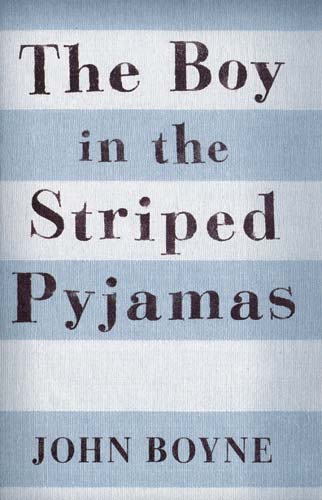
2. The Boy in the Striped Pyjamas - 50 Books in a Year

After I finished The Kite Runner, I thought it would be good to read something a bit lighter, funnier and more uplifting. Then Aidan thrust his copy of The Boy in the Striped Pyjamas into my hands. I knew it was something to do with the Holocaust, having gleaned that much from the trailer for the film, but thought, it being a children's book (aimed at Year 7ish), it couldn't be that harrowing to read.

Given To Kill a Mockingbird is one of my favourite books, I should have known better. It's the same concept: a child telling a story through their own eyes, with the reader understanding more than the child themself does. It makes it all the more chilling to read of a concentration camp in the childish language of a 9-year-old, just as Scout's innocent narrative of racism in the deep South renders it more disturbing to her audience.

Aidan would say it is a spoiler to mention the Holocaust as he thinks the book is at its most powerful when the reader has no concept of its subject matter and thus gradually understands as Bruno, the narrator, tells his story. I agree with him, but it's hard to write a book review without revealing anything about the book.

Having spent several years of my life studying the Second World War from various angles, I suspected I might find this book somewhat clichéd. But the perspective is different; Bruno is the son of a Nazi officer who has found favour with 'the Fury' and runs the concentration camp at 'Outwith'. He befriends a Jewish boy who lives on the other side of the barbed wire fence which is all that separates his hellish life from Bruno's cosseted one.

The characters in this book are well developed and Bruno's thoughts, as a 9-year-old boy, will resonate with any other boy of a similar age. I felt there was a discussion to be had about just how far the author pushed Bruno's naivety - at times he seemed to be doggedly determined in his failure to understand the events unfolding around him - but most books request you to suspend disbelief in one way at some point anyway, and as long as it is in one way only, as it is here, I will happily acquiesce.

The only weak point for me was the ending. I'm very particular about endings, and this one didn't quite satisfy, but it was also suitably harrowing; a plus point in my book, as I hate sugar-coated finales.

I have not yet seen the film, but want to do so. I'm curious to see how they could interpret a book whose principal purpose is to convey its tale via a specific means of narration rather than plot. I've heard good things though, so will reserve judgement.

Next up is book 3: Even Dogs in the Wild by Ian Rankin.